
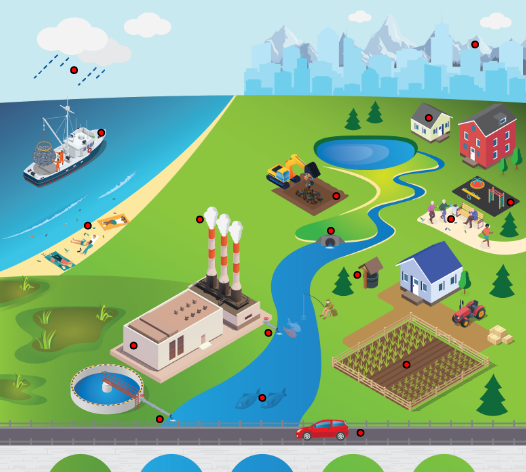
Microplastics can be transported through atmospheric deposition
Discarded fishing line and nets and degradation of paint from vessels contribute to microplastic formation
Macroplastic trash may wash into the ocean, then break up into smaller and smaller pieces, which become microplastics
Industrial air emissions may contain microplastics
Manufacturing of primary microplastics such as nurdles to produce macroplastics can result in the release of microplastics to the environment
Microplastics can be released through wastewater outfalls and be transported by water
Microplastics can be released through wastewater outfalls and be transported by water
Aquatic organisms ingest microplastics, which can result in trophic transfer
Microplastics are generated through typical tire wear and breakdown of roadway materials
Microplastics may be present in agricultural lands due to direct application of fertilizer pellets, biosolids from wastewater treatment plants, or breakdown of plastic sheeting
Microplastics are generated by the breakdown of singe use plastics
Microplastics can be generated through the breakdown of rubberized play surfaces and plastic playground equipment or rubber mulch
Microplastics may be present in household products such as toothpaste or facial cleaners. Microplastics can be generated through household activities such as laundering of clothing
Microplastics have been found in snow on high mountain peaks
Microplastics are found in groundwater
Landfilling of macroplastics can lead to generation of microplastics
Microplastics are found in stormwater runoff